








DIASPORA TIMES – EDITORIAL
For Public Policy Discourse and the Congressional Record
Copy this concern to your representative.
The Diaspora Times publishes this editorial as the collective voice of naturalized Americans and members of the global diaspora who believe firmly in the rule of law, constitutional governance, and the inherent dignity of human life. Our purpose is not to oppose immigration enforcement, but to call for enforcement that is lawful, orderly, humane, and consistent with America’s foundational principles.
The United States has an unquestionable sovereign right to regulate its borders and enforce its immigration laws. No serious policy debate denies this reality. At the same time, Congress, the courts, and successive administrations have affirmed that immigration enforcement must be conducted within the bounds of due process, equal protection, and proportionality. These principles are not optional. They are central to the legitimacy of the American state.
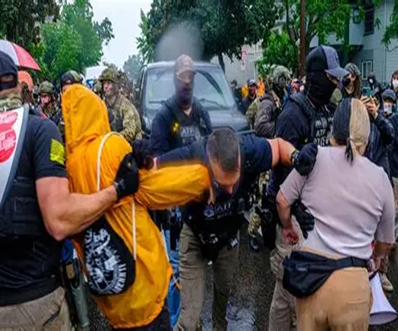
In recent months, however, diaspora communities have experienced growing fear and uncertainty stemming from immigration enforcement practices perceived as abrupt, confrontational, and insufficiently transparent. This fear is not limited to undocumented individuals. It extends to lawful permanent residents, naturalized citizens, asylum seekers, students, and workers lawfully present under valid visas. When legally present individuals fear routine encounters with authorities, the system itself warrants careful scrutiny.
Of particular concern are enforcement actions that appear to rely on subjective indicators such as accent, language, appearance, or perceived national origin. Such practices, whether intentional or incidental, risk racial and ethnic profiling. They erode trust in federal institutions and weaken cooperation between immigrant communities and law enforcement agencies. Public safety depends on trust. When trust collapses, both communities and officers are placed at risk.
A troubling dynamic increasingly reported within diaspora communities is the perception that some of the most aggressive enforcement encounters involve officers who are themselves immigrants or the children of immigrants. This observation is not offered as an accusation, nor as a condemnation of individual officers who serve under federal authority. Rather, it reflects a profound psychological and social tension within immigrant communities. When enforcement appears excessively punitive, the fact that it is sometimes carried out by individuals with shared immigrant histories intensifies feelings of betrayal, internalized hostility, and fear. This phenomenon deserves institutional reflection, congressional oversight, and training review, not blame.
The Diaspora Times urges policymakers to re-center civil immigration enforcement around verification before confrontation. Except in cases involving serious criminal activity, public safety threats, or national security concerns, initial enforcement actions should prioritize written notices, requests for documentation, or administrative summonses that allow individuals to demonstrate lawful presence. This approach is consistent with due process, reduces unnecessary escalation, and protects both civilians and officers.
Orderly enforcement is not weakness. It is professionalism. It is also cost-effective. Avoiding needless detention, injury, litigation, and community disruption conserves public resources while preserving institutional legitimacy.
Immigrants are not a peripheral presence in the American economy. They are essential. From hospitals and nursing homes to farms, construction sites, factories, universities, laboratories, and service industries, immigrant labor sustains entire sectors of the U.S. economy. Disruptive enforcement practices reverberate far beyond the individuals directly affected. They create labor shortages, slow production, destabilize local economies, and raise costs for American consumers.
Many immigrants, including those from Africa, Latin America, Asia, and Europe, maintain strong ties to their countries of origin. They invest back home, build businesses, and maintain family networks. When lawful options for adjustment, voluntary departure, or orderly repatriation exist, many will comply if treated with fairness and dignity. Compliance increases when enforcement is predictable, transparent, and humane.
Congress has a central role to play. Oversight of immigration enforcement agencies must be strengthened. Arrest and detention standards in civil cases must be clarified. Pathways for lawful adjustment, work authorization, and voluntary departure must be expanded and modernized to reflect economic realities. Humane enforcement is not incompatible with border security. On the contrary, it enhances compliance, reduces resistance, and reinforces respect for the law.
America is a nation governed by laws, but it is also a nation built by immigrants. These truths are not in conflict. Immigration policy that honors both strengthens national cohesion and global credibility.
The Diaspora Times submits this editorial in the interest of constructive dialogue, constitutional fidelity, and a more orderly, humane, and effective immigration system. We believe that enforcement grounded in law, restraint, and dignity is not only possible, but necessary for the future stability of the United States.
Diaspora Times Editorial Board
The Diaspora Voice
DISCLAIMER
This editorial represents the collective perspective of the Diaspora Times Editorial Board and contributing members of the diaspora community. It is intended for policy discussion, public education, and advocacy for humane and lawful governance. The views expressed do not allege wrongdoing by specific individuals or agencies, nor do they constitute legal advice. The Diaspora Times supports lawful immigration enforcement carried out in accordance with the U.S. Constitution, federal statutes, and international human rights standards.