






By Professor Peter Ndiang’ui, Fort Myers, Florida, USA.
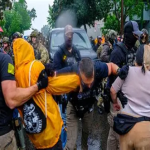
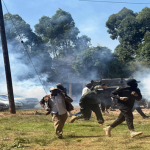
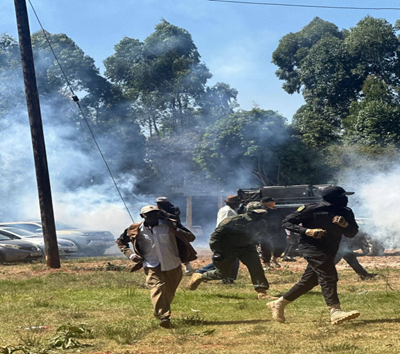
On Sunday, January 25, 2026, worshippers at Witima Church in Othaya, Nyeri County, were violently attacked in an episode that lays bare a dangerous and rapidly escalating national crisis: the deliberate harassment, intimidation, and assault of Kenyan citizens exercising their constitutionally guaranteed right to worship. This was no random disturbance and no isolated lapse in security. It was part of a discernible and deeply troubling pattern of coordinated attacks on churches, particularly those attended by, or perceived to be politically sympathetic to, former Deputy President Rigathi Gachagua.
The question before the nation is no longer whether these incidents are connected. The evidence overwhelmingly suggests that they are. The far more urgent and damning question is why they continue unchecked, and why those responsible appear to operate with absolute impunity.
Within political, civic, and human-rights circles, these attacks are increasingly and credibly linked to President William Ruto and to actors believed to be operating with the protection, acquiescence, or deliberate indifference of the state. Whether through direct orchestration, tacit approval, or the calculated failure of law enforcement to intervene, the Kenyan state has abdicated its most basic obligation: the protection of innocent civilians. This failure should alarm every Kenyan, regardless of political affiliation, ethnicity, or faith.
The gravity of this moment is intensified by Kenya’s unresolved past. The specter of Kiambaa still looms ominously over the national conscience. Nearly two decades ago, worshippers were burned alive inside a church, an atrocity carried out under the political stewardship of William Ruto and one that remains an unhealed moral wound. In 2022, Ruto urged Kenyans to believe that he had fundamentally changed. He presented himself as a born-again Christian, publicly brandished the Bible, knelt at altars across the country, and implored voters to replace memory with faith. Many Kenyans accepted this narrative in good faith and entrusted him with power.
But history does not dissolve simply because it is politically inconvenient. When churches once again become sites of violence, fear, and intimidation, questions of continuity—of character, power, and impunity—are no longer speculative. They are unavoidable. The nation is forced back to the haunting memories of Kiambaa and compelled to ask, with growing dread: Is the same tragedy unfolding once again? Are we bound to witness another Kiambaa? The troubling trend, unfortunately, suggests an affirmative answer unless decisive action is taken before it is too late.
Today, women and children enter churches seeking prayer, refuge, and communal solace, only to encounter terror. These worshippers are not political actors. They are not participants in elite power struggles. They are ordinary citizens. Even if President Ruto harbors political animus toward his former deputy, no conceivable justification exists for unleashing violence on congregants. What grievance does the state hold against children kneeling in prayer, or women singing hymns?
Scripture itself speaks unequivocally to this moment: “Defend the weak and the fatherless; uphold the cause of the poor and the oppressed. Rescue the weak and the needy; deliver them from the hand of the wicked” (Psalm 82:3–4). A government that presides over attacks on worshippers—and fails to intervene—stands in direct moral contradiction to the faith it publicly professes.
The attack at Witima Church is especially incriminating because it occurred in close proximity to a police station. Law enforcement was present. The capacity to intervene existed. Yet the police did nothing. This raises profoundly disturbing questions about the independence, professionalism, and political capture of Kenya’s security apparatus. What purpose does a taxpayer-funded police service serve if it cannot, or will not, protect citizens at their most vulnerable? Has policing been subordinated to political loyalty rather than constitutional duty?
This pattern of violence, compounded by systematic non-response, crosses a clear constitutional red line. Freedom of worship is unequivocally protected under Kenyan law. It is neither conditional nor discretionary. It is not subject to political rivalries or executive whims. Sustained attacks on churches, coupled with state inaction, constitute grave violations of fundamental rights and demand urgent domestic and international scrutiny.
Where, then, are Kenya’s human-rights institutions? Where is the Kenya National Commission on Human Rights? Where is Amnesty International? Where is the judiciary? Where is Parliament? Where are the voices that routinely and rightly condemn abuses elsewhere, yet now remain conspicuously silent as Kenyan worshippers are assaulted in broad daylight? Silence in the face of such violations is not neutrality. It is complicity.
The time has come to escalate accountability beyond domestic mechanisms that appear compromised, intimidated, or unwilling to act. Kenya must seriously consider international oversight, including engagement with the International Criminal Court (ICC), to examine patterns of politically linked violence, state complicity, and the systematic failure to protect civilians. International law exists precisely for moments when a government proves unable, or unwilling, to police itself.
This is not merely an attack on Rigathi Gachagua. To frame it as such is a dangerous and dishonest diversion. This is an attack on innocent Kenyan citizens. It is an assault on constitutional freedoms, on the sanctity of worship, and on the foundational principle that the state exists to protect life—not terrorize it.
Kenyans are an extraordinarily patient people—perhaps to their own detriment. They have endured economic hardship, serial deception, broken promises, and deepening inequality. But patience must never be mistaken for weakness, nor silence for consent. A government that cannot guarantee safety in places of worship has forfeited its moral authority and must be subjected to the highest level of constitutional and legal scrutiny—including impeachment.
This is a defining moment for the Republic. Kenya must choose whether it will normalize violence against worshippers or confront it with clarity, courage, and accountability. The Constitution is unambiguous. The law is clear.
The question before the nation is stark and unavoidable: How long will this be allowed to continue?
Is it not time to say unequivocally that enough is enough?