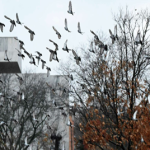









An unusual incident recently captured public attention in Kenya when a flock of birds reportedly descended on State House, Nairobi, interrupting a meeting taking place within the official residence of President William Ruto. To some observers, the event appeared merely coincidental, a natural occurrence of birds moving through the city. Yet throughout history, sudden and disruptive appearances of birds around seats of power have often been interpreted symbolically, sometimes even prophetically.
Across civilizations, unusual animal behavior near centers of authority was rarely dismissed lightly. Kings, emperors, and political leaders historically regarded such events as omens requiring reflection and caution.
One of the most famous historical precedents dates back to ancient Rome during the time of Julius Caesar. Roman historians wrote extensively about strange natural occurrences before his assassination in 44 BCE. According to accounts preserved by historians such as Suetonius and later dramatized by William Shakespeare in Julius Caesar, unusual bird activity was observed in Rome before the famous Ides of March. Flocks of birds reportedly attacked a sacred eagle carrying a laurel branch in the Forum — a symbolic act interpreted by Roman augurs as a sign of impending political upheaval. Within days, Caesar would be assassinated in the Senate by conspirators from his own inner circle.
The Romans took such incidents seriously because birds were believed to carry messages from the gods. The practice of augury and observing the behavior and flight patterns of birds, guided decisions ranging from warfare to the election of rulers. When birds behaved strangely around places of authority, it was often interpreted as a warning of instability or betrayal.
Medieval Europe offers another intriguing historical example. Chronicles from England describe how large flocks of ravens gathered around the Tower of London shortly before the fall of King Richard II in 1399. Ravens circling royal buildings were widely feared as harbingers of political change. In medieval symbolism, ravens were associated with the collapse of power or the death of rulers. While modern historians interpret these reports cautiously, the symbolism left a lasting mark on European folklore.
Another remarkable account comes from Ethiopia during the reign of Haile Selassie. Oral historical narratives describe unusual gatherings of birds around imperial compounds in Addis Ababa in the early 1970s, a time when Ethiopia was experiencing growing political unrest, famine, and public dissatisfaction. Within a few years, the emperor’s long rule ended when the Derg military regime overthrew the monarchy in 1974. Though the presence of birds had natural explanations, many Ethiopians retrospectively interpreted them as symbolic warnings that the political order was changing.
These stories highlight a recurring theme in human history: leaders often ignore subtle signals of deeper unrest until events reach a breaking point. Whether the birds themselves carry meaning or not, societies frequently interpret such occurrences as metaphors for public mood.
In Kenya’s case, the sudden disruption of a meeting at State House by birds comes at a time when the nation is navigating economic pressures, political competition, and heightened public debate. Kenya remains a vibrant democracy with strong institutions, yet history reminds us that leaders must always remain attentive to the sentiments of the people they govern.
Symbolically, birds have long represented freedom, public voice, and the restless spirit of societies. When flocks appear unexpectedly around places of power, it can be interpreted, metaphorically at least, as a reminder that leadership must remain responsive to the currents moving through the nation.
For President William Ruto, the incident may simply be an amusing moment in the State House’s daily life. Yet history suggests that wise leaders often treat unusual moments as opportunities for reflection. Across centuries, rulers who remained attentive to warning signs, whether political, social, or symbolic, were better positioned to preserve stability.
Kenya’s political history itself demonstrates that power can shift rapidly when public frustrations accumulate. Listening carefully to the national mood, strengthening institutions, and encouraging inclusive dialogue remain essential safeguards for any administration.
The birds at State House may not have carried a supernatural message. But in the language of history, such moments often serve as powerful reminders that leadership must stay alert, humble, and attentive to the winds of change.