








By Arch. Dr. D.K. Gitau- The Diaspora Times Chief Editor.
“The architect bears secondary liability only if clear negligence or silence in the face of obvious danger is proven. The professional duty to control and direct the structural and forces of nature acting on a building, rests squarely with the structural engineer. Deregistering architects alone would be theatre, not justice.“
Architecture is commonly defined as the art and science of creating space, but in practice, a building is never the product of a single mind or profession. It is a multi-disciplinary process involving architects, structural and civil engineers, quantity surveyors, land surveyors, mechanical and electrical engineers, contractors, and government inspectors. Nyumba haijengwi na mtu mmoja, and when it collapses, responsibility cannot be reduced to one convenient scapegoat. The architect serves as the lead consultant and coordinator of the design team, responsible for spatial planning, functionality, and the overall design intent, but the architect does not calculate loads, size columns, or design reinforcement. Kila mtu ako na kazi yake. The professional duty of controlling and directing the forces of nature acting on a building lies squarely with the structural engineer.
A structure stands because its columns, beams, slabs, and foundations are properly designed, reinforced, and executed. Civil Engineering is the control and direction of the great forces of nature. A structural engineer, from the same discipline, is responsible for the structural components that ensure the building’s structural integrity. The engineer specifies reinforcement details, concrete grades, load paths, and safety factors, and is required to inspect the site during construction to confirm that reinforcement placement and concrete mix ratios meet minimum structural requirements. When this responsibility is neglected, buildings do not collapse by chance. Failure at this level is not cosmetic; it is catastrophic. Architects and engineers attend joint site visits and monthly site meetings, but attendance does not confer equal technical liability. Engineering responsibility remains engineering responsibility.
An architect can be faulted only if clear warning signs were ignored or if unsafe construction was knowingly permitted to continue. Architects are not structural supervisors, but they are trained professionals with a duty of care. Ukiona moshi, ujue kuna moto. If large cracks, excessive deflection, exposed reinforcement, or visible distress were present and no alarm was raised, the architect may bear secondary professional negligence, but not primary blame. To deregister an architect simply because they are seen as the overall team leader would be unjust and technically flawed. Leadership does not mean absorbing failures that belong to another licensed profession.
Structural collapse does not occur suddenly. Concrete gives warnings long before it gives way. Columns and slabs speak through cracks and deformation. For a building to suddenly collapse, there must have been visible signs of distress, major cracking, sagging slabs, or settlement. If such signs existed, then the structural engineer either failed to inspect adequately, failed to enforce corrective measures, or issued warnings that were ignored and not escalated through formal stop-work notices. Any of these scenarios amounts to professional failure. Engineering is not theory on paper, it is a responsibility on site.
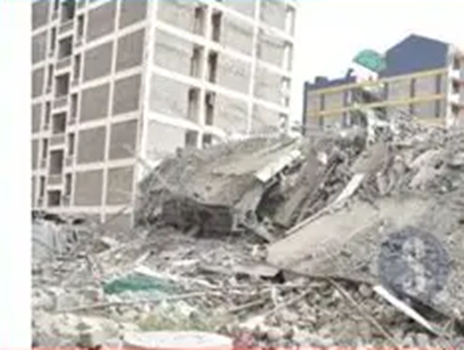
Contractors are not innocent bystanders in this process. They execute the work and often control day-to-day decisions on site. If a contractor altered reinforcement details, reduced concrete quality, added extra floors beyond approved drawings, or ignored visible cracks and warnings, then liability becomes direct and criminal. Hapo kosa halina mjadala. Many building collapses in Eastleigh and similar areas follow this pattern, profit placed above safety, shortcuts taken quietly, and everyone hoping the structure will survive long enough to be sold or occupied.
The role of the city inspectorate cannot be ignored. Approval is not a one-time rubber stamp. Inspectors are required to conduct regular site visits, especially for multi-storey buildings. Serikali ikilala kazini, wananchi hulipa kwa maisha yao. Buildings do not rise floor by floor without visibility. Extra floors do not appear overnight. If inspectors approved deviations, ignored cracks, failed to issue stop-work orders, or simply did not visit the site, then regulatory failure becomes part of the tragedy.
Ultimately, responsibility must be shared honestly and professionally. Primary technical blame lies with the structural engineer if the collapse was structural in nature. Direct responsibility for execution lies with the contractor if standards were violated or warnings were ignored. Regulatory blame lies with the city inspectorate if oversight failed. The architect bears secondary liability only if clear negligence or silence in the face of obvious danger is proven. Haki si kulenga mtu mmoja, haki ni kusema ukweli wote. Deregistering architects alone would be theatre, not justice. If Kenya is serious about preventing future tragedies, accountability must be comprehensive, transparent, and fearless, otherwise tutalia leo, kesho tutajenga tena, na kuanguka kutaendelea.